CCASCOE strengthened its international engagement and climate-security advocacy through active participation in the Berlin Climate Security Conference (BCSC), a leading global forum bringing together civil society, international organizations, academia and policy experts.
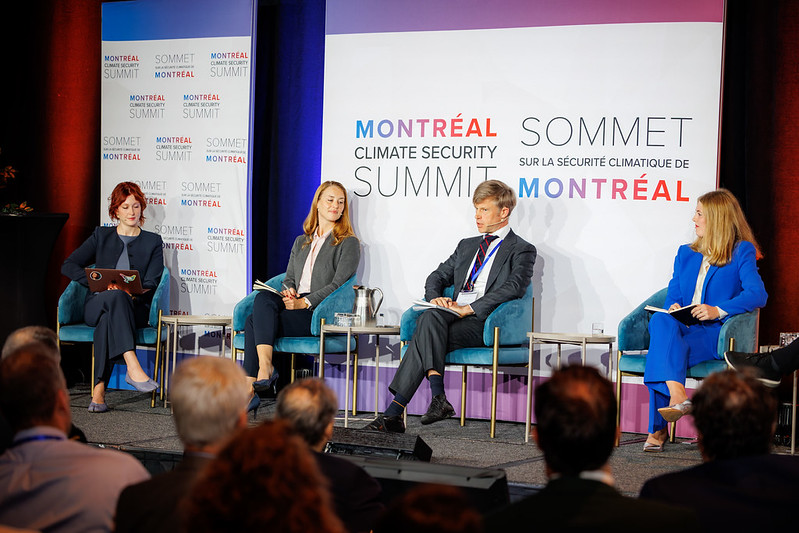
Although the conference attracts a different audience than the Montréal Climate Security Summit (MCSS)-with limited military representation-this contrast underscored the complementarity of both events. MCSS was repeatedly referenced throughout the conference, including by the State Secretary of the German Federal Foreign Office, reinforcing its growing visibility within the climate-security landscape.
Climate Action, Science, and Democracy at the Forefront
The State Secretary opened the conference by stressing the importance of proactive climate policy, noting that climate security requires balancing urgent crises with long-term priorities.
Ambassador Tony Agotha, EU Special Envoy for Climate and Environment, added that the cost of inaction is insurmountable, and that climate policy should remain grounded in science and democratic values.
These themes resonated strongly with CCASCOE’s mission and the Centre’s advocacy for climate-informed defence preparedness.
Breakout Session: “No Defence Readiness Without Climate Readiness”
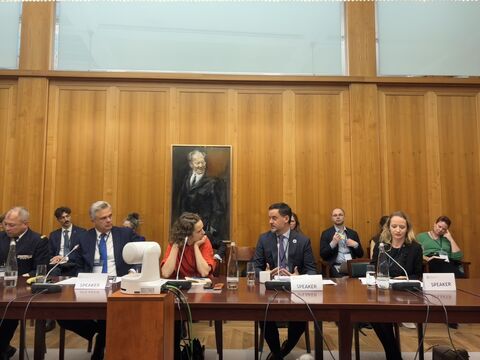
CCASCOE Director Mathieu Bussières spoke on a high-level EU–NATO panel alongside:
- Ambassador Tony Agotha, EU Special Envoy for Climate and Environment
- LCol Patrick Laurent, European External Action Service
- Mona Köhler-Schindler, NATO International Military Staff
Moderated by Dr Ronja Scheler from the German Federal Ministry of Defence, the session explored how climate change is being integrated into NATO and EU military thinking, deterrence, and operational planning.
Speakers highlighted that:
- defence and climate resilience must advance together
- militaries need to remain strong, competitive, and adaptable
- science must inform decision-making
- climate impacts on equipment, personnel, and capabilities require urgent assessment
Mr. Bussières also presented CCASCOE’s multi-COE Arctic and High North assessment, stressing the need to anticipate how military platforms will operate in future climate conditions.
Panelists underlined the importance of civil-military and private-sector collaboration to address climate impacts on defence capabilities.
Expanding CCASCOE’s Global Climate-Security Network
By attending BCSC, CCASCOE strengthened ties with international climate-security stakeholders, promoted awareness of defence-related climate challenges, and reinforced the importance of military engagement in global climate-security discussions.
The Centre’s message-that there is no defence readiness without climate readiness-resonated strongly across conference sessions and bilateral meetings.