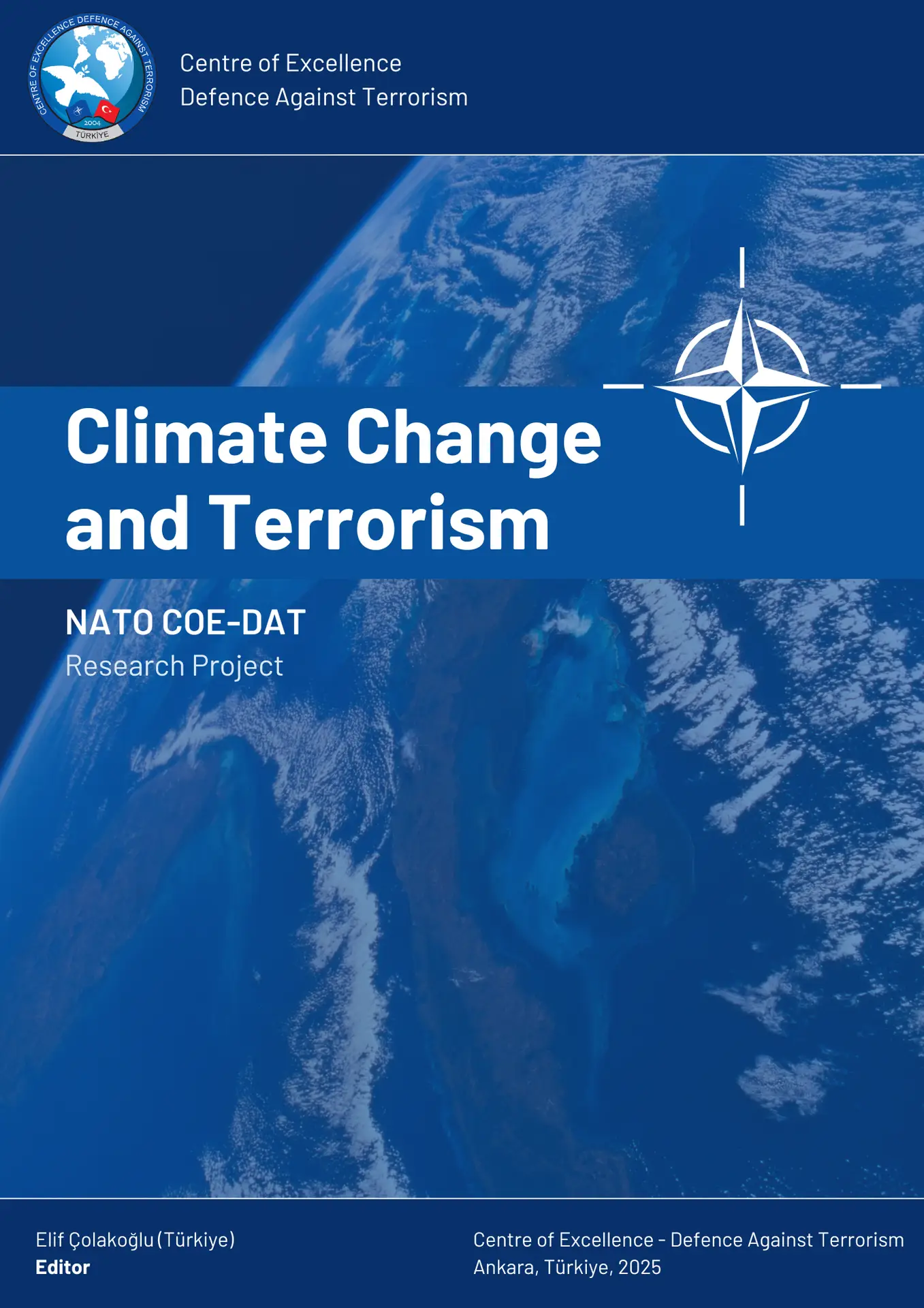
This report presents the findings of a multi-author research initiative led by the NATO Centre of Excellence – Defence Against Terrorism (COE-DAT), examining how climate change intersects with terrorism and global security.
Bringing together experts from defence, environmental science, and international relations, the project explores how climate-driven stressors—such as droughts, floods, and resource scarcity—are exploited by terrorist organizations to gain influence, recruit, and destabilize vulnerable regions. Through conceptual analysis and regional case studies, including Somalia, the Northern Triangle, Senegal, and Türkiye, the report highlights the growing role of climate change as a threat multiplier in fragile contexts.
The publication reflects NATO’s evolving approach to climate security and contributes to ongoing efforts to integrate environmental risk into defence planning, crisis response, and counter-terrorism strategy.
The edited book is a product of the Centre of Excellence-Defence Against Terrorism
(COE-DAT). It is produced for NATO, NATO member countries, NATO partners,
related private and public institutions and related individuals. It does NOT represent the
opinions or policies of NATO, COE-DAT or the framework and sponsoring nations of
COE-DAT. The views and terminology presented in the book are those of the authors.
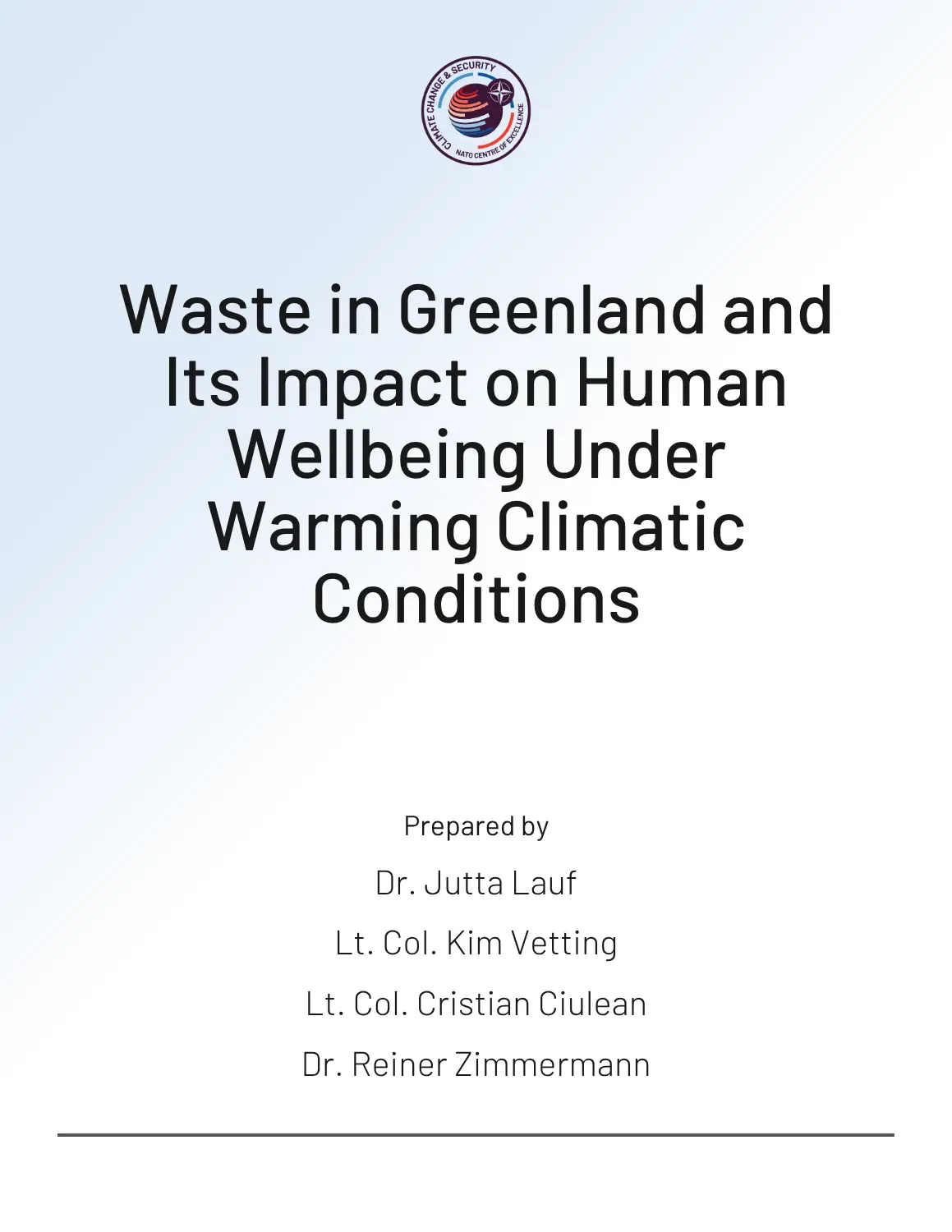
Waste in Greenland and Its Impact on Human Wellbeing Under Warming Climatic Conditions
May 22, 2026
May 2026
Scroll to Top
Cite this publication
Faucibus porta lectus nisl risus semper habitant ut. Sit pharetra scelerisque eu montes consequat cursus interdum.
APA, 7th edition
Martin, L. (2024). L’impact du changement climatique sur les écosystèmes. Science et Vie, 2024(1), 1-10. Récupéré de https://www.scienceetvie.fr/article-changement-climatique
APA, 7th edition
Martin, L. (2024). L’impact du changement climatique sur les écosystèmes. Science et Vie, 2024(1), 1-10. Récupéré de https://www.scienceetvie.fr/article-changement-climatique
APA, 7th edition
Martin, L. (2024). L’impact du changement climatique sur les écosystèmes. Science et Vie, 2024(1), 1-10. Récupéré de https://www.scienceetvie.fr/article-changement-climatique
Cite this publication
Please use the following citation when referencing this publication:
Çolakoğlu, Elif (2025), Climate Change and Terrorism – NATO COE-DAT Research Project – Ankara: Centre of Excellence Defence Against Terrorism.