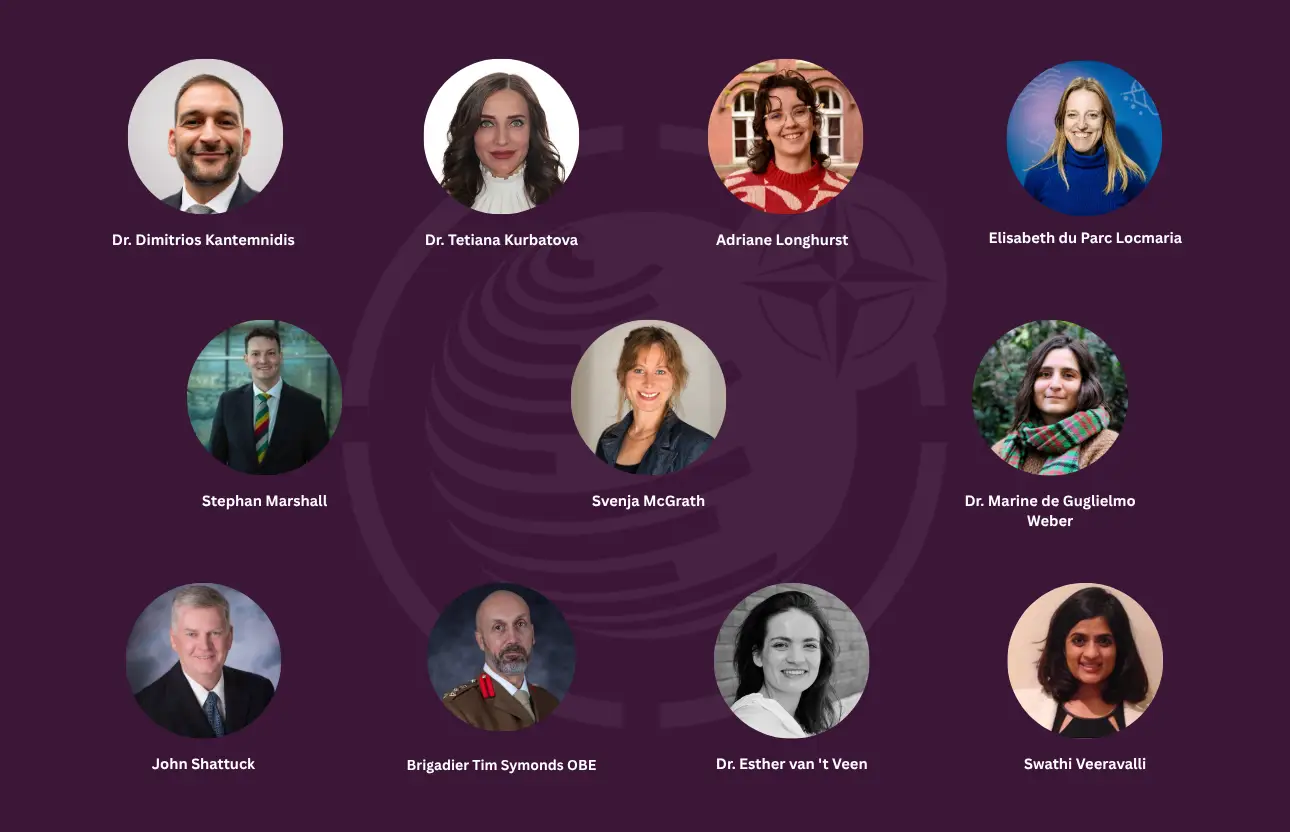
Eleven researchers and practitioners from across Allied nations and Ukraine will explore some of the most pressing climate-security challenges facing NATO, from Arctic resilience and energy security to climate-related migration, hybrid threats, and military adaptation.
Climate change is reshaping the strategic environment in which NATO operates. From the Arctic to the Southern Flank, Allies face growing challenges to military readiness, critical infrastructure, energy security, and societal resilience. To help address these challenges, the NATO Climate Change and Security Centre of Excellence (CCASCOE) is pleased to welcome its 2026 cohort of Fellows.
Selected through a highly competitive process, the eleven Fellows bring expertise from military personal in duty, retired, reserves, also from academia, government, defence institutions, international organizations, and civil society. Their projects examine how climate-related risks are reshaping the security environment and explore practical approaches to strengthen Allied resilience, readiness, and strategic foresight.
As climate-related risks grow in scale and complexity, decisionmakers require evidence-based analysis that connects scientific understanding with operational reality. The CCASCOE Fellowship Programme supports that effort by bringing together experts from diverse backgrounds to generate practical insights for policymakers and military practitioners. Working independently while engaging closely with the Centre, Fellows contribute research that advances understanding of emerging climate-security risks across the Alliance.
Collectively, the 2026 Fellows reflect the breadth of today’s climate-security agenda. Their projects address challenges that affect NATO’s ability to anticipate, prevent, and respond to security risks in an increasingly complex environment. From the future of Arctic cooperation and energy resilience in conflict zones to climate-driven displacement and emerging operational requirements, their research will contribute to a deeper understanding of how climate change influences security across the Alliance.
Meet the 2026 Fellows
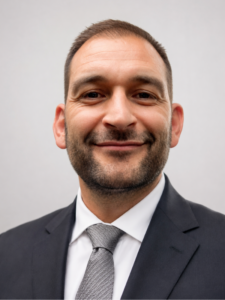
Dr. Dimitrios Kantemnidis
Climate-Migration Blind Spots on NATO’s Southern Flank
Dr. Dimitrios Kantemnidis is Founder of the Theophrastus Research Institute and a former officer in the Hellenic Navy. He previously directed the Closed Controlled Access Centre of Lesvos and has extensive experience supporting NATO missions and European security initiatives. His work focuses on climate security, migration, and environmental security challenges.

Dr. Tetiana Kurbatova
Resilience of Ukraine’s Energy System under Compound Climate and Hybrid Security Threats
Dr. Tetiana Kurbatova is an Associate Professor at Sumy State University whose research focuses on energy security, energy policy, and low-carbon transitions. She has published extensively on renewable energy, decarbonization, and energy-system resilience, and has contributed to several national and international research initiatives. Her work combines empirical analysis with practical policy recommendations for strengthening long-term energy sustainability.
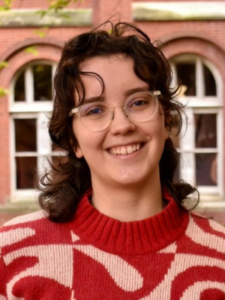
Adriane Longhurst
Stranded at Sea: The Politics and Climate Security of Emergency Response and Climate Monitoring Infrastructure of the Russian High North post-2022
Adriane Longhurst recently completed a Master of Arts in Eurasian, Russian and East European Studies at Georgetown University. Her research focuses on the intersection of climate change, energy, science, and international affairs in Russia and Central Asia. Her graduate work examined Russian approaches to climate change and the Northern Sea Route, bringing together environmental and geopolitical perspectives on the rapidly changing Arctic region.
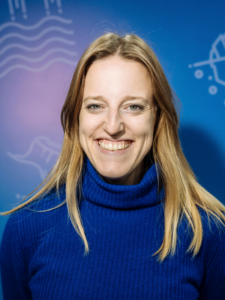
Elisabeth du Parc Locmaria
Climate Mobility as an Instrument of Hybrid Warfare on NATO’s Southern Flank: A Geospatial Analysis of Displacement, Disinformation, and Anticipatory Resilience
Elisabeth du Parc Locmaria specializes in climate mobility and human security. She has worked with the International Organization for Migration and has held positions with the Norwegian Refugee Council, the European External Action Service, the Belgian Ministry of Foreign Affairs, and UN-Habitat. Her work focuses on the links between migration, climate change, resilience, and security.
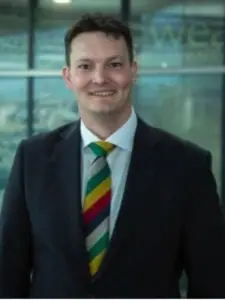
Stephen Marshall VR
Powering the Adapted Force: Climate Resilience for Allied Battery and Energy Storage Capability under Compounded Operational Stress
Stephen Marshall VR is a defence and energy security specialist whose research explores preventative approaches to resilience and humanitarian capability. His career includes senior leadership roles in government and the private sector, including service as Chief Operating Officer and Gold Commander at the Met Office. He continues to serve as a Lieutenant Colonel in the British Army Reserve.
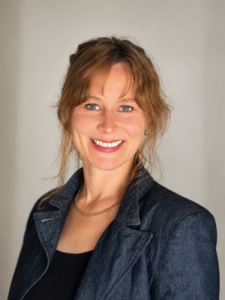
Svenja McGrath
Svenja McGrath is a Research Associate at the University of Hamburg, where she teaches and conducts research in political geography and security studies. Her academic work focuses on international security, law, and geographic approaches to resilience and cooperation. She has also contributed to research commissioned by the Dutch Ministry of Foreign Affairs.
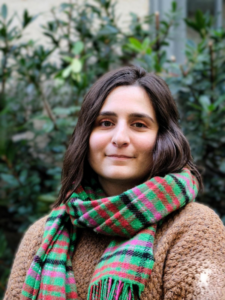
Dr. Marine de Guglielmo Weber
Blind Spots on the Northern Flank: The Breakdown of Arctic Science Cooperation as a NATO Climate-Security Vulnerability
Marine de Guglielmo Weber is a PhD researcher at the Institute for Strategic Research (IRSEM) at the École militaire in Paris. Her work focuses on climate security, energy, strategic resources, and their implications for defence. Her research has examined the geostrategic dimensions of geoengineering as well as the evolving defence postures of Nordic and High North states.
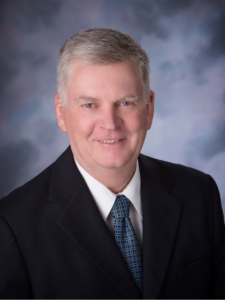
John Shattuck
Climate-Driven Boundary-Layer Effects on Acoustic Counter-UAS Detection for NATO Readiness
John Shattuck is a retired United States Air Force Lieutenant Colonel, meteorologist, and climatologist with more than four decades of experience. His career has spanned weather forecasting, Earth observation, defence planning, intelligence support, and space operations. As founder of Shattuck Advisory, he advises and mentors organizations working on dual-use technologies, climate security, autonomous systems, and operational decision support.
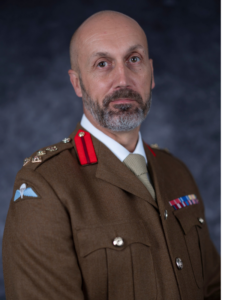
Brigadier Tim Symonds OBE
Procuring for the Climate Crisis: Cultivating Cultural and Logistical Adaptability via Multi-Vector Energy Force Design
Brigadier Tim Symonds OBE serves as Head of Productivity and Sustainability in the British Army, where he leads implementation of the Army’s Energy and Environment Capability Resilience Strategy. With more than 28 years of military service, he has extensive operational and leadership experience and continues to advance sustainability and resilience initiatives within defence institutions.
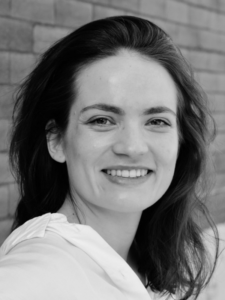
Dr. Esther van ‘t Veen
Civil-Military Cooperation during Wildfires: A Climate Security Challenge
Dr. Esther van ‘t Veen is an Assistant Professor at the Netherlands Defence Academy, where she researches climate security and civil-military relations. She developed and teaches the Academy’s climate security curriculum and currently focuses on how armed forces and civilian authorities cooperate in responding to increasingly severe wildfires and other climate-related emergencies.

Swathi Veeravalli
Governing Through Volatility: Designing Resilient NATO Climate-Security Guidance for an Era of Political Uncertainty
Swathi Veeravalli is Adjunct Faculty at Georgetown University and Principal of General Resilience Solutions, LLC. Her work focuses on systemic risk, climate security, resilience, and strategic foresight. Between 2022 and 2024, she served as Director for Climate Security and Adaptation at the White House National Security Council, where she helped shape climate-security policy and resilience planning at the highest levels of government.
About the CCASCOE Fellowship Programme
The CCASCOE Fellowship Programme supports forward-thinking researchers, military practitioners, and policy experts working at the intersection of climate change and security. Fellows conduct independent research while benefiting from engagement with CCASCOE subject-matter experts, access to the Centre’s growing network, and opportunities to showcase their findings through publications, briefings, and events. Each fellowship is supported by an award of CAD $10,000. The programme is designed to strengthen the evidence base available to NATO and Allies while fostering a broader community of practice dedicated to climate security.
The 2026 call welcomed proposals across the full spectrum of climate-security issues while prioritizing five thematic areas: adaptation of military equipment and infrastructure to changing climate conditions; uncrewed systems and drones in a changing climate; cognitive warfare, including disinformation and misinformation related to climate change; the human dimension of modern warfare affected by climate change; and climate-security dynamics in specific regions.
Based in Montreal, CCASCOE was officially accredited by NATO in May 2024 and inaugurated in October 2024 by its twelve sponsoring nations. The Centre is a multinational, NATO-accredited international military organization that operates outside the NATO Command Structure.
Looking Ahead
The challenges posed by climate change will continue to shape the security environment for decades to come. Through their research, the 2026 Fellows will help advance understanding of these challenges and identify practical approaches to strengthen resilience, readiness, and strategic foresight across the Alliance.
CCASCOE looks forward to working with this exceptional cohort and sharing their findings with Allies, partners, and the wider climate-security community.